The Big Idea
The Trivium is the opening model for classical education. I think that incorporating this kind of teaching method in how I teach the faith can be a really helpful way to say on track with what I actually want people to be able to do. I want them to know and think and be able to communicate what they believe which is exactly how this model is set up.
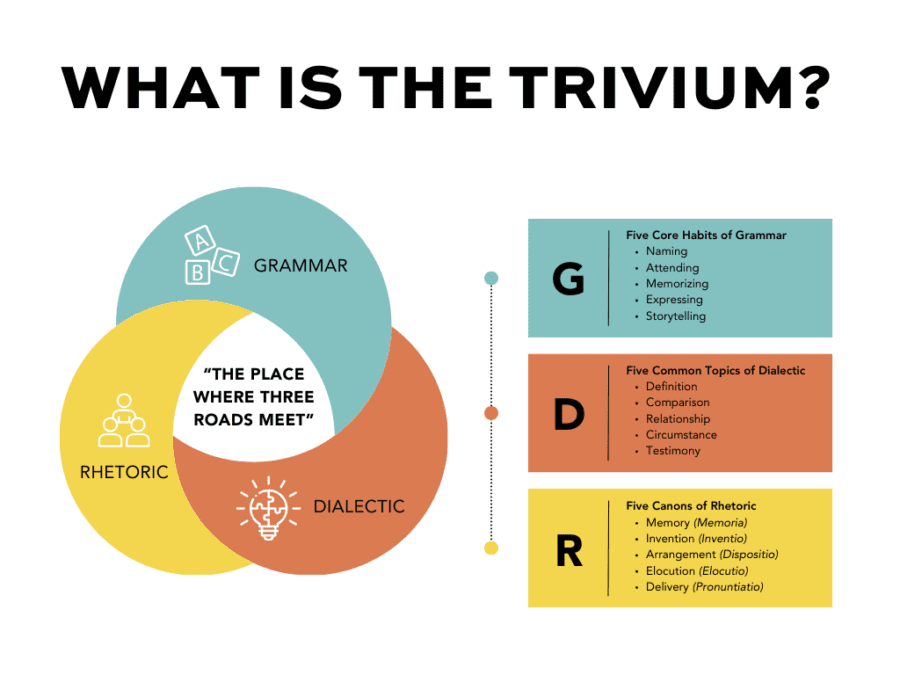
Grammar
Similar Note: Grammar of the Small Catechism
Every discipline or area of study has its own grammar. This grammar is more than just the core function of sentences and language structure. It is the basic vocabulary and pieces of knowledge you need to get around in that discipline (i.e. you need to know the parts of the body when working in medicine).
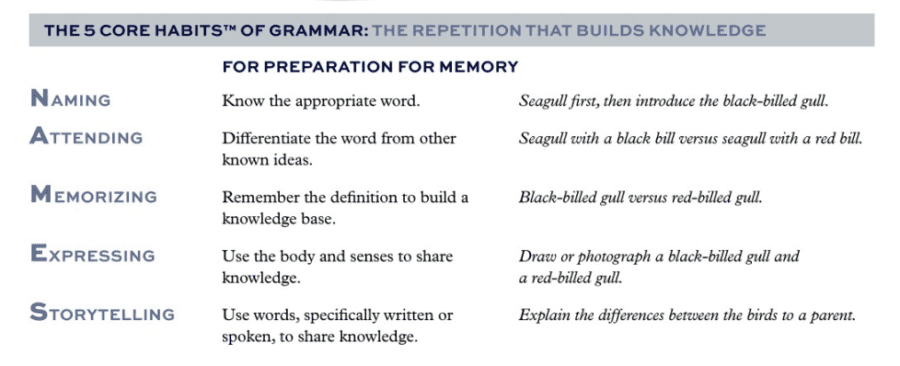 We want to be able to express and use the grammar of a subject not just regurgitate it. Therefore here are a basic list of the kinds of tasks that can help us learn grammar:
- Start by just Naming things and collecting the basic units of the grammar. Where are the verbs? What is the subject? What are things that confuse me or feel unexplained? etc.
- Then move to Attending looking at all the pieces and starting to see how they hold together. How are they organized? What changes the meaning of other things in the grammar? etc.
- Start to Memorize the core pieces of grammar as well as their differences. As you build that base you will be able to start bringing what you see with you into other sections.
- Expressing is then the next stage. How to you start to put these things into your own words or how would you show them to someone else? Can you learn a song or poem or piece of liturgy that expresses these things?
- Storytelling is using what you have learned to tell a story or bring it to life somehow.
Logic
How are you able to think clearly about the subject and discipline.
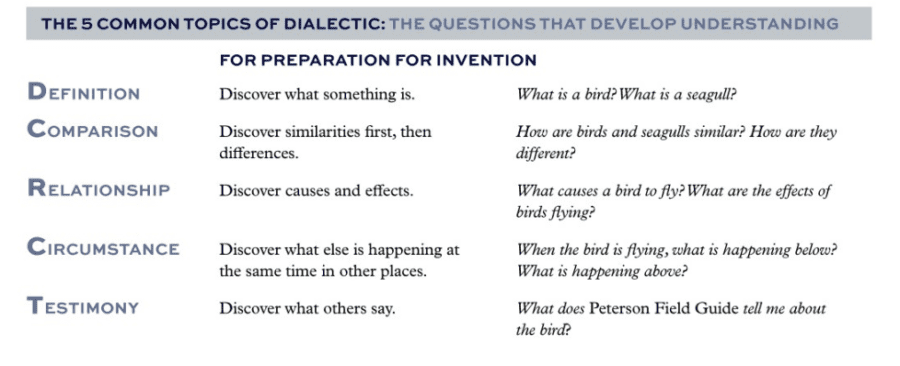
- Definition - How do you categorize or define things? Each category makes a choice about how things hold together and shapes the way we see things. Where did these categories come from? Are there other ways to categorize the same thing?
- Comparison - How are things similar, or different or to what degree are they similar or different?
- Relationship - How are things related to one another? or how do they affect each other?
- Circumstance - is something possible or impossible to figure out with the information you have? when or when will the thing under consideration happen?
- Testimony - what kind of source are we working with?
- Authority – An expert in a subject
- Testimonial – Given by someone who witnessed an event firsthand
- Statistics – Quantitative data supporting an argument
- Maxims – Common knowledge
- Laws – A type of testimony encoded in writing and said to be binding
- Precedences – Evidence through past example
Rhetoric
How can you communicate what you know and persuade others toward the truth?
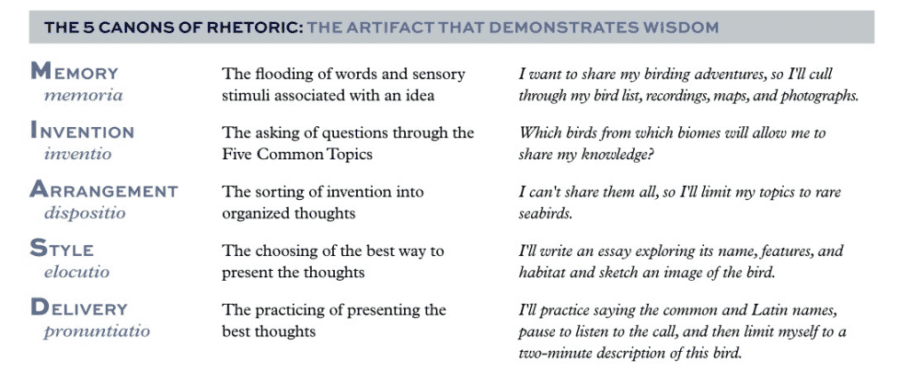
- Invention - What should I say? Brainstorming and research and planning.
- Arrangement - In what order should I say it? get things in a logical and clean flow.
- Elocution - How should I say it? what style or method would be the most persuasive to the audience I am trying to reach and how can I deliver it that way.
- Memory - how does what I have memorized or have in my memory relate to this and how will I use it or add it to my memory?
- Delivery - How should I present this truth in speech and action? the actual writing or speaking of the idea to your audience