The Big Idea
Being obsessed with the number of people in worship can be a very unhealthy way to measure a churches health. While it is a valid metric that can be informative in certain ways. Here are a few others that can give a different perspective.
Numerical Metrics
- Attendance (the old standby). Church, communion, etc.
- Percentage of congregation involved in Bible Study - From Kober, Built on the Rock.
- The number of distinct cultural groups represented in congregation. This has been called the Cultural Diversity Metric.
- Age and Life Stage distributions.
- All the various giving metrics.
Events, Programs, Groups and Spaces Metrics
How many are there of:
- Events - Occasional (usually annual or monthly) things that bring people together.
- Programs - Regular things that often run on a curriculum.
- Groups - Regular gathering around a particular thing.
- Spaces - Open ended places for people to gather (coffee hour, etc.)
- Types of Gatherings - From Chapter 13 Small Church Essentials by Karl Vaters
- Come and Watch - least effective
- Come and Help
- Come and Give
- Come and Have Fun
- Come and Learn
- Come and Worship
Pipelines and Flows
How do things feed into or cross over to each other?
- Event Pipeline- How does coming to one event lead to coming to other events?
- Leadership Pipeline - How does small scale volunteering lead to taking on the “bigger” roles in the church over time.
- What is the overall flow between different areas of ministry? Are there connections or is there a lot of silos?
- Age change flow - What is someone’s path and experience like moving from say being a youth to an young adult? Are we preparing them for that kind of move or not?
Further Analysis of These Entities
- Relational Health Framework
- Which category does each thing fit in (down, in, out). Is there a balance or imbalance?
- Age and Life Stage Served
- Which age range our life stage does each thing fit in (young children, children, youth, families, adults, Men, Women, etc.). Is there a balance or imbalance of these?
- How does this compare to the numerical distribution of ages in the congregation?
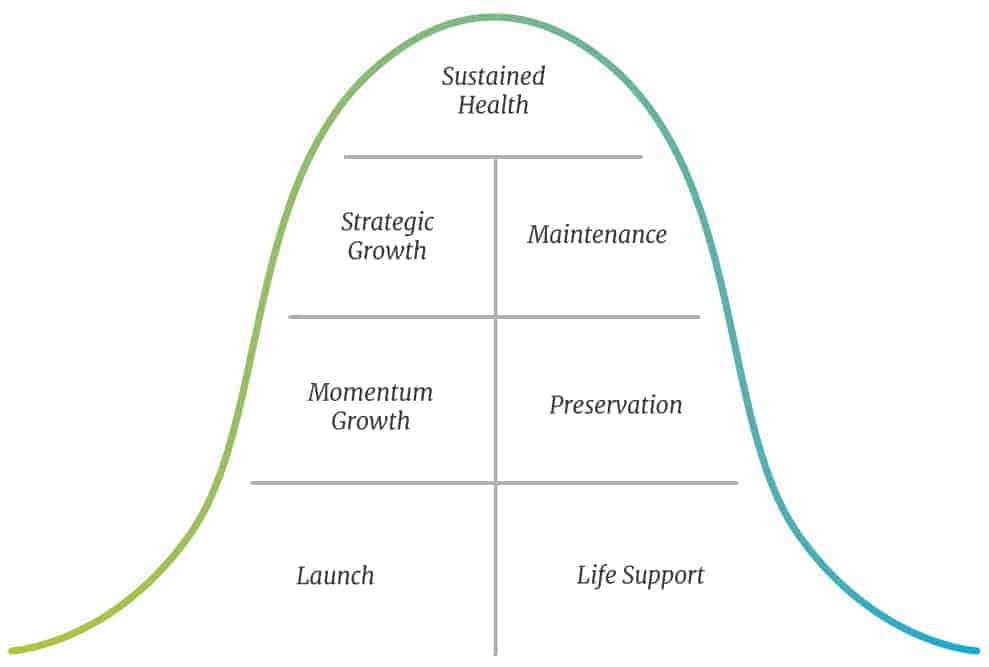
- In what stage of the Church Lifecycle is each thing?
Leadership Training and Development Metrics
- How many members and leaders are in apprenticeship or mentor relationships?
- How do we think about the “bench” of leaders that are in our congregation?
- What percentage of members actively volunteer?