🌱Seed 😐Neutral 🟡Consideration 🛠️BringingLifeintotheWorld
The Big Idea
I am really digging the idea of a food forest especially the idea of a plant guild or basically a group of plants that all work together as a small ecosystem.
Related Notes: Wild Edible Garden Design Pattern A Tea Garden Plants Around Church
Resources
- How to repair broken fruit trees – Grow Great Fruit https://growgreatfruit.com/pruning-fruit-trees/shaping-and-repairing-fruit-trees/
- Learn more about Food Forests - Central Coast Edible Garden Trail https://centralcoastediblegardentrail.org.au/garden-tips/learn-more-about-food-forests/
- Also an interesting site that has all kinds of resources from stuff like making beet sugar and who knows what else. https://permies.com/
Back Yard Plant Guilds
A starting guild matrix that I would like to try:
- Clover as a ground cover and nitrogen fixer
- Tomcat Clover - Trifolium willdenovii
- California Poppies as dynamic accumulators
- Lavender, Rosemary, Sage - All as pest deterrents and pollinator attractors
- Roman chamomile for attracting good bugs and pest deterrence
- Creeping thyme - needs full sun
- Onions garlic and chives
- Marjoram and oregano
The Idea of Plant Guilds
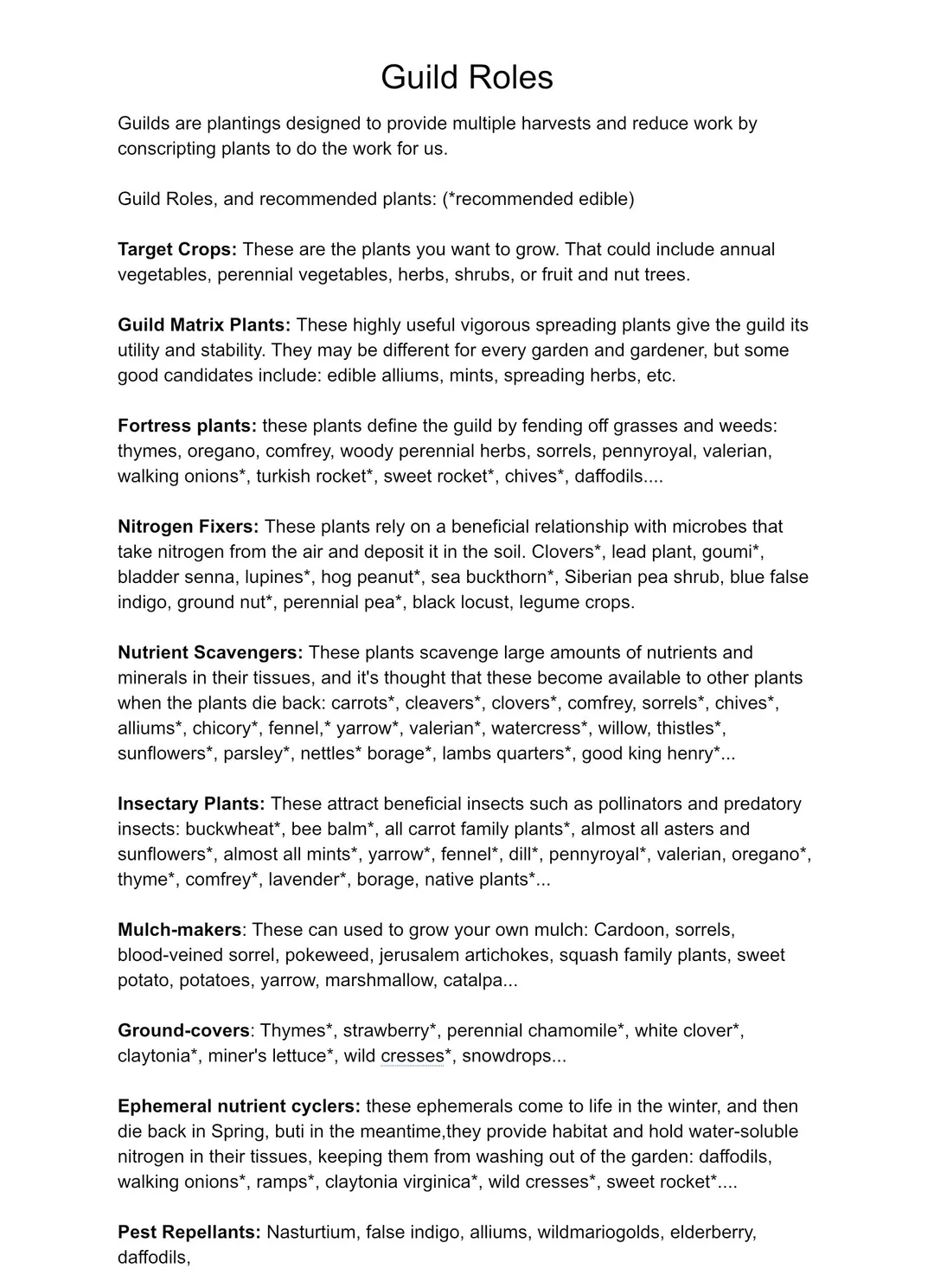
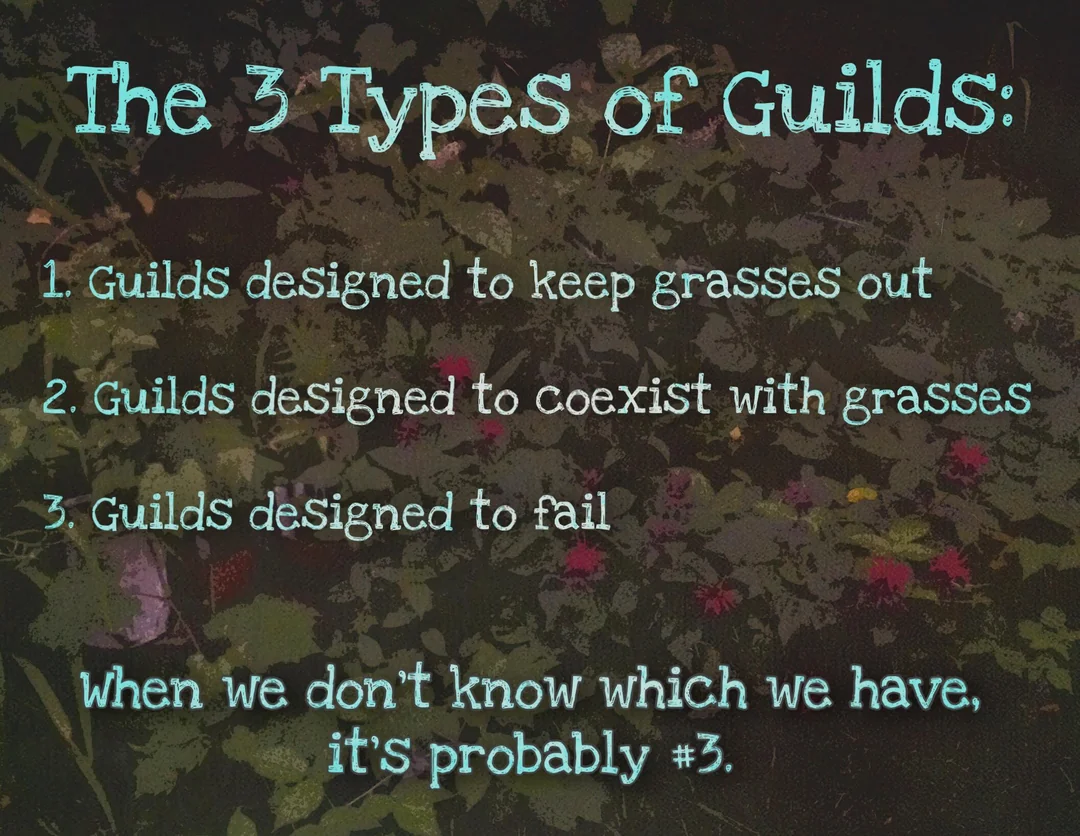
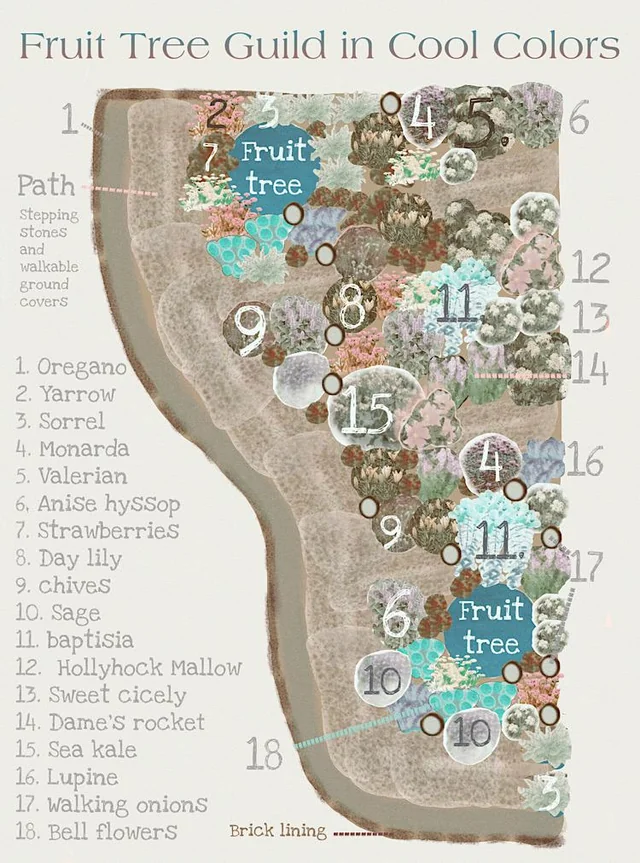
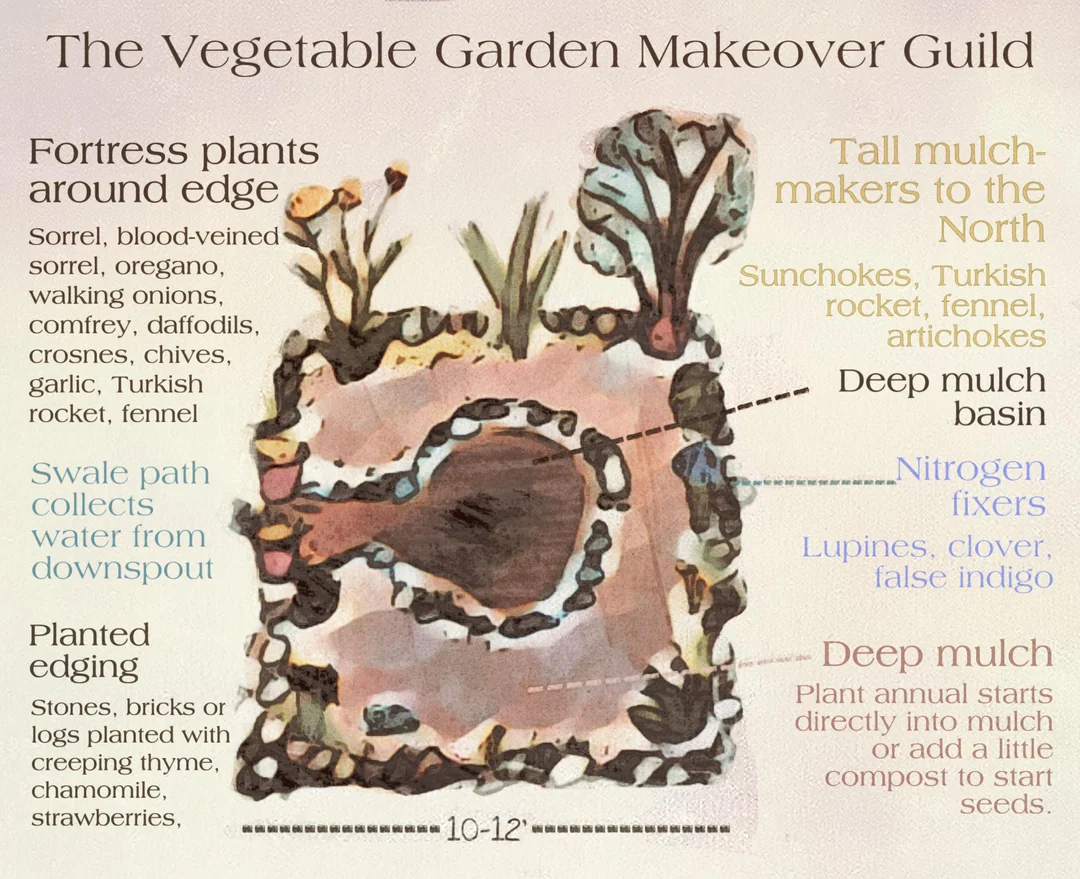
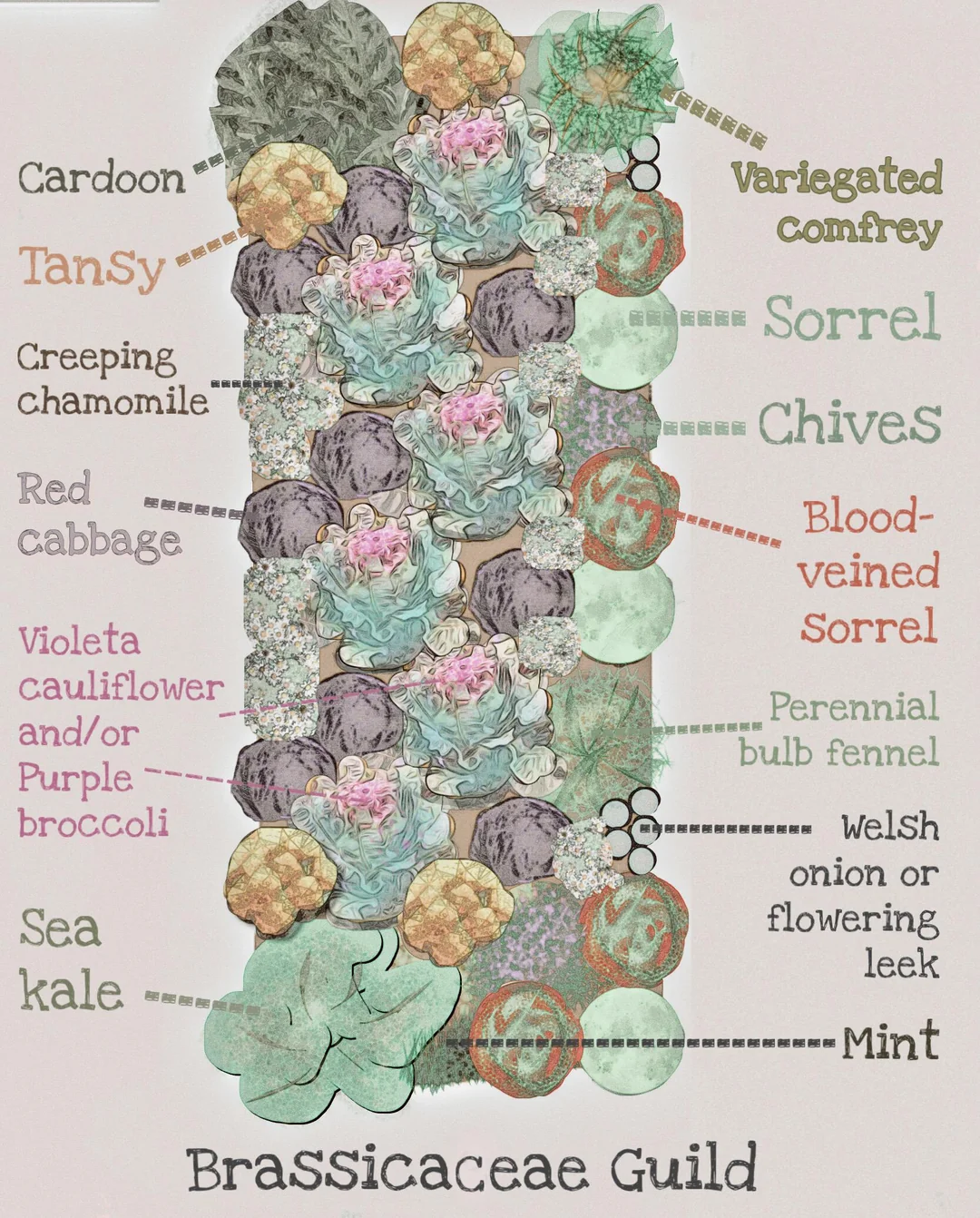
For me, ”guilds” have been the most powerful and transformative concept in all of Permaculture. Guilds are plantings designed to have the stability and function of natural ecosystems, which makes them very low-maintenance and productive over long periods of time.
I probably would not still be gardening if it were not for guilds. When we create an annual garden, we must prep the land, plant the plants, tend them through their vulnerable years, and harvest them at the end of the season. Then we have to do it all over again. It’s a huge amount of labor.
Guilds turn us into wild-tenders, who gently interact and co-evolve with an ecosystem. We can “catch and store” our energy into many years of returns. While that annual garden gets you one year of yields, a good guild may get you big yields in year 1, and every year thereafter, with almost no maintenance work. I have had large guilds that required less than 1 hour of yearly maintenance for 10 years or more. Once a guild is right, you can move on to the next area of the yard, and the next, creating long-lasting low-maintenance plantings. In this way, we can transform the world. (You can read more about my gardens by visiting my profile.)
And so, I garden almost exclusively in guilds.
A good modern 101 course on guilds will start with the ”First Rule of Guilds.” (See picture) In the image this applies to ”grass,” but really it is about whatever “resident vegetation” you have. If you have creeping Charlie, or sour grass, then the first rule of guilds applies to those.
After that, there are 2 big factors that give a guild the kind of stability we’re going for. The first is the “guild matrix“ I did a recent post on. It’s a more advanced concept but well worth understanding and figuring out.
This was developed from reading on modern applied ecology and visiting a lot of established mature permaculture sites. Virtually every old site with long-evolving guilds has created a few guild matrixes, and gardens dominated by a good guild matrix are almost always the gardeners’ favorite part of their gardens. A good guild matrix is also the best demonstration of Permaculture I have ever encountered, since it will give us that truest idea of an ”ecosystem that naturally grows lots of food.” IN other words, nobody ”invented“ this, it’s just putting a word to a cool thing many great gardeners are doing out there in the real world.
The second major factor is fortress plantings. These give the guild its shape and resistance to grass and weed encroachment. Going back to the first rule of guilds, most failed guilds did so because they were overrun with grasses or weeds.
With these down, guild role theory can help us design very low labor. The idea of guild roles is to try to copy some of the things we can observe in wild plant communities. A second way of thinking about it is that we can think of all the kinds of work we would be doing in the garden, and try to recruit plants to do that work for us. That includes pollination, pest and weed prevention, and even conserving water. Keep in mind, guild roles are not a scientific concept, but a design tool. Because we can‘t really ever know all the roles a plant will fulfill in a real ecosystem! But we can use guild theory to try to increase biodiversity and cover some of the basics.
Armed with these tools, it’s possible to create gardens that can be nearly as stable as the wild edible ecosystems I documented here. For me, guilds like these have been the key to growing a complete family diet and decent income on just a few hours of maintenance labor per week.
If we can get just one guild right on our sites, then we can copy that and spread it around. In that way we can truly transform the landscape into a beautiful, abundant, ultra-low-maintenance garden.
Important notes:
- Nitrogen fixers need to be cut down or trimmed in order to release nitrogen into the soil they usually just keep it for themselves otherwise.
The Idea of a Guild Matrix
https://transformativeadventures.org/2021/03/30/on-guild-matrixes-and-allstar-plants/
Central California Nitrogen Fixers
Nitrogen fixing roots. https://www.laspilitas.com/advanced/nitrogen-fixing-roots.html
Planting Guides